T.S. Eliot on Writing: His Warm and Wry Letter of Advice to a Sixteen-Year-Old Girl Aspiring to Become a Writer

The Marginalian | Maria Popova

“If you write what you yourself sincerely think and feel and are interested in,” the great marine biologist and author Rachel Carson advised a blind girl aspiring to be a writer, “you will interest other people.” Six years earlier, around Valentine’s Day of 1952, a sixteen-year-old self-described “aspiring Young Writer” by the name of Alice Quinn reached out to T.S. Eliot (September 26, 1888–January 4, 1965) — by that point one of the most famous writers in the world — hoping he might answer several questions about the creative process, what it takes to be a writer, and how he himself developed his creative faculties.
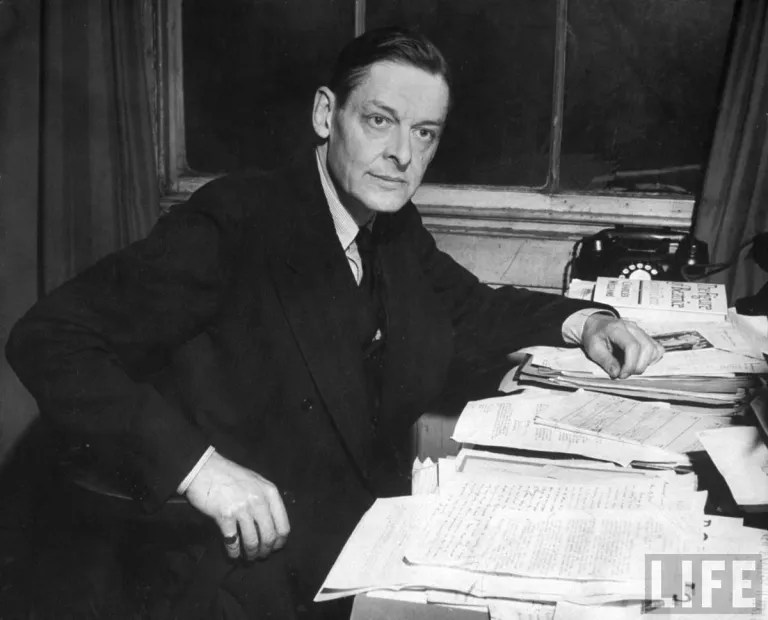
Unlike Carson and unlike Albert Einstein, who also frequently replied to fan letters, particularly those from young people, Eliot rarely did. But something about the young woman’s earnest inquiry touched him. His response — thoroughly warm and just the right amount of wry, full of simply worded wisdom — may be his most direct statement of advice on writing. It was only ever published in Hockney’s Alphabet (public library) — that wonderful, forgotten 1991 charity project raising funds for AIDS research through short essays by famous writers about the letters of the alphabet, each illustrated by artist David Hockney. Provided by his Eliot’s, Valerie, his response to Alice Quinn — the only posthumous contribution to the volume — appears under the letter Q. Read more….


What the best mentors do

From Harvard Business review | Anthony K. Tjan

Mentorship comes in many flavors. It doesn’t always work unless leaders bear in mind a few common principles.

Mentorship comes in many flavors. It doesn’t always work unless leaders bear in mind a few common principles.

Over the past few years, as part of my book, I’ve been researching how leaders can better judge and develop their talent in light of a changing, more purpose-driven, more tech-enabled work environment. Having interviewed close to 100 of the most admired leaders across business, culture, arts, and government, one important characteristic stands out: They do everything they can to imprint their “goodness” onto others in ways that make others feel like fuller versions of themselves. Put another way, the best leaders practice a form of leadership that is less about creating followers and more about creating other leaders. How do they do that? I’ve noticed four things the best mentors do:

Put the relationship before the mentorship. All too often, mentorship can evolve into a “check the box” procedure instead of something authentic and relationship-based. For real mentorship to succeed, there needs to be a baseline chemistry between a mentor and a mentee. Studies show that even the best-designed mentoring programs are no substitute for a genuine, intercollegial relationship between mentor and mentee. One piece of research, conducted by Belle Rose Ragins, a mentoring expert and professor at the University of Wisconsin-Milwaukee, demonstrated that unless mentees have a basic relationship with their mentors, there is no discernable difference between mentees and those not mentored. All this is to say that mentoring requires rapport. At best, it propels people to break from their formal roles and titles (boss versus employee) and find common ground as people.

Read more….

The death of plagiarism /

Brad Esposito January 26, 2023 (Very Fine Day) A few years ago, somewhere in the free-flowing and seemingly endless spiral of 2016 American Politics, a particular quote was rolled out endlessly: Our greatest fear is not that we are inadequate, it is that we are powerful beyond measure. It was credited to a range of […]

Defining Censorship Before Denouncing It


January 12, 2021

Posted by Larry M. Elkin, CPA, CFP®

Facebook and Twitter app icons.
photo by Pixabay user LoboStudioHamburg

If the opinion editors at The New York Times decline to publish your cogent and insightful essay on a matter of great public importance, are they practicing censorship?

No. They are exercising editorial judgment, or maybe mere business judgment, depending on the pressures they feel nowadays to get audiences to engage with their content. It may be good judgment or bad judgment, but it is not censorship. Censorship occurs when the government restricts or compels expression under threat of penalties, which may be administrative, judicial or extrajudicial, such as directing a mob to your home. The New York Times is a privately owned, privately run platform, which its proprietors may offer to or withhold from contributors as they see fit. To demand they do otherwise would run afoul of the First Amendment’s press and speech freedom guarantees.

Read article: https://www.palisadeshudson.com/2021/01/defining-censorship-before-denouncing-it/

#censorship #freedomofspeech #socialmedia

Presentation: Mayer Herskovics, Survivor, Thriver, Influencer

Presented to the Yeshiva University Library Staff and AJL-NYMA members on Zoom, Thursday, 15th October, 2020.

[presentation]