5 Hard Lessons I’ve Learned As A Career Coach

J.T. O’Donnell
June 14, 2016
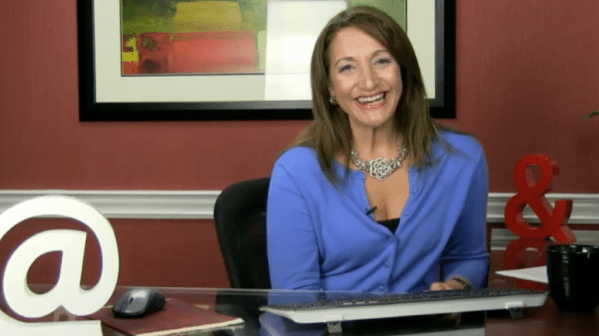
how-to-become-a-6-figure-career-coach_thumbnail-1024x576

I’ve been a professional career coach since 2002. Over the last 10+ years, I have learned a lot about the industry and what it takes to be an effective career coach. [Click here to learn more about becoming a career coach.]

Back when I became a coach, the concept wasn’t as widely accepted as it is today. In fact, my clients were afraid to admit they were working with a career coach because they felt like it indicated there was something wrong with them. Today, we now understand career coaching isn’t a sign of weakness, but a path to greatness. It’s why all the top pro athletes and business executives use them. If you want to optimize your performance and achieve new levels of success and satisfaction in your career, it’s more than likely you’ll work with a coach at some point. Why? If you could do it on your own, you would have by now.

I Learned These Lessons The Hard Way

Having worked with literally thousands of people on their careers, I have learned some valuable professional lessons. In the beginning of my coaching career, I thought I could help everyone. I was wrong. You can only help people who are ready to be helped. I wasted hundreds of hours on people who just weren’t ready to succeed. I learned the hard way the following five things:

People only turn to career coaching when they are in pain.

School teaches us everything except how to manage our careers. As a result, nobody enters the professional world with the right set of skills and abilities to successfully manage their careers. Unfortunately, it isn’t until a person makes a major mistake or has a career setback that they seek coaching. Only then do they have the Ah-ha Moment that they need to close the gap in their knowledge and abilities so they can get back on track. Read more…

The 1 Thing You Need to Achieve Work-Life Balance by Lolly Daskal

There is a secret to work-life balance, but you’re not going to like it.

How to Confront Conflict in the Workplace by Dennis McCafferty

posted 11-16-2015

confrontconflict_0

How to confront conflict in the workplace: CIOs and other managers too often focus on the personalities involved with a dispute instead of root causes, research shows.

When problems are dismissed or ignored, they fester and grow into bigger problems.

– See more at: http://www.cioinsight.com/it-management/careers/slideshows/how-to-confront-conflict-in-the-workplace.html#sthash.LkBUUOvQ.dpuf


It’s difficult to manage a conflict-free office: Strained relationships among employees account for no less than three out of five difficulties within organizations, research shows. Meanwhile, 43% of non-management workers feel that their bosses do not deal with conflict as well as they should. In covering this topic, the recent book, The Essential Workplace Conflict Handbook: A Quick and Handy Resource for Any Manager, Team Leader, HR Professional, or Anyone Who Wants to Resolve Disputes and Increase Productivity (Career Press/available now), defines the common sources of morale-sapping acrimony while providing best practices in addressing these disputes. Authors Barbara Mitchell and Cornelia Gamlem reveal that CIOs and other managers too often focus on the personalities involved with a situation instead of root causes. They also must understand that their personal approach in dealing with an issue weighs greatly in “making it go away”—or creating even larger problems. The following “conflict myths” and best practices are adapted from the book. Mitchell and Gamlem are HR consultants and co-authors of The Big Book of HR. – See more at: http://www.cioinsight.com/it-management/careers/slideshows/how-to-confront-conflict-in-the-workplace.html#sthash.LkBUUOvQ.dpuf

The progressive librarian: 10 ways to be more forward-thinking

by Sarah Tanksalvala

For librarians, being more progressive means embracing new ways of approaching their job and the role of the library in a university. Progressive librarians are working to revitalize libraries by making them more than simply places that store information. Part museum, part lab, progressive libraries are exploring and defining their services based on people’s needs.

“Librarians find themselves in the midst of trying to reinvent themselves and what they do,” says Sebastien Marion, virtual services librarian at New York Institute of Technology. “The challenge is how to go from book-storage places to collection places to places that engage with skills.”

Progressive librarianship has a number of defining components. Progressive librarians support reading culture, in an academic environment in which many are pushing for all-digital libraries. Progressive librarians support personal learning, and see the library as a place where personal learning and lifelong exploration can take center stage.

Here are 10 tips for librarians looking for ways to become more progressive.


1. Focus on the human component: Libraries might be seen as places to go work quietly, but progressive librarians look for ways to make libraries more human-centric. Read more…

Is the future going out of print? Why we’re confident books will survive the digital age

Robert Fulford | June 6, 2016 2:59 PM ET

boox

Mikael Damkier/Getty Images/iStockphoto

The philosopher Francis Bacon, looking out at the future from his vantage point in the English 17th century, said that everyone should consider the effect of three inventions that were unknown in ancient times: Printing, gunpowder and the compass. “These three have changed the appearance and state of the whole world.”

Printing was the innovation Bacon put first, and the one that concerns us most in 2016. Printing made the modern era possible by disseminating the books that opened new ways of thinking and encouraged new human aspirations. Under the influence of printing, the Protestant Reformation, the Renaissance and modern science all sprang to life. It was a revolution – “the Unacknowledged Revolution,” as one modern historian called it because (despite Bacon) most of the world didn’t understand what was happening.

Today, on the other hand, we know the change that confronts us. The printing era shows signs of coming to an end. Bookstores everywhere are closing down because many people prefer to read books in digital form or perhaps prefer not to read. What is at stake? Literacy, literature and the culture of books, with its vast libraries and its flourishing (but often unprofitable) publishers. All of it is in danger. Read more…