[IFLA-L] Open Societies are Healthy Societies: IFLA rejects unjustified barriers to the free movement of persons

Human Rights | Library ethics & Advocacy | Freedom of Movement

logo-iflaOpen Societies are Healthy Societies

Libraries are at the heart of healthy societies. By bringing people together – students, researchers, creators, citizens – they support learning, sharing, and the creation of new ideas.

They also support the delivery of key human rights, as set out both in national constitutions and international conventions, most importantly the Universal Declaration of Human Rights: freedom of expression and access to information, as well as the right to participate in cultural life and enjoy the benefits of scientific progress.

Libraries have long supported the flow of ideas and information across borders. IFLA has called for reforms to laws that hold this back. Evidence shows that such flows promote innovation and creativity, which in turn drives growth, jobs and equality everywhere.

However, arbitrary and unjustified barriers to the movement of people jeopardise this situation. Such policies run contrary to states’ obligations under international law, which prohibit discrimination of any kind on the basis of race, colour, sex, language, religion, political or other opinion, national or social origin, property, birth or other status, as set out in the UN’s New York Declaration for Refugees and Migrants.

Read more:  www.ifla.org/node/11176

Why Orwell’s ‘1984’ matters so much now

Books

January 25 at 2:05 PM

President Trump may not be a big reader, but he’s been a boon for sales of dystopian literature. Amid our thirst for adult coloring books and stories about missing girls and reincarnated puppies, some grim old classics are speaking to us with new urgency. Ray Bradbury’s “Fahrenheit 451 ,” Aldous Huxley’s “Brave New World ” and Margaret Atwood’s “The Handmaid’s Tale ” have all risen up the latest paperback bestseller list.

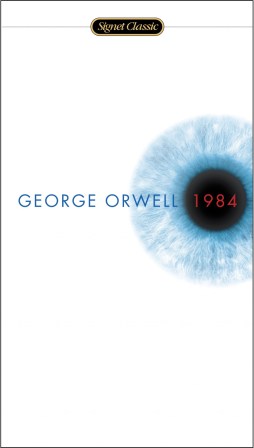
But by far the greatest beneficiary of our newly piqued national anxiety is George Orwell’s

198420george20orwell20cover20with20border

Enter a caption

“1984,” by George Orwell (Signet)


Philosophy can teach children what Google can’t | Charlotte Blease

With jobs being automated and knowledge being devalued, humans need to rediscover flexible thinking. That starts in schools

3500 Ireland’s president Michael D Higgins: ‘The teaching of philosophy is one of the most powerful tools we have at our disposal to empower children.’ Photograph: Jane Barlow/PA

At the controls of driverless cars, on the end of the telephone when you call your bank or favourite retailer: we all know the robots are coming, and in many cases are already here. Back in 2013, economists at Oxford University’s Martin School estimated that in the next 20 years, more than half of all jobs would be substituted by intelligent technology. Like the prospect of robot-assisted living or hate it, it is foolish to deny that children in school today will enter a vastly different workplace tomorrow – and that’s if they’re lucky. Far from jobs being brought back from China, futurologists predict that white-collar jobs will be increasingly outsourced to digitisation as well as blue-collar ones.

How should educationalists prepare young people for civic and professional life in a digital age? Luddite hand-wringing won’t do. Redoubling investment in science, technology, engineering and maths (Stem) subjects won’t solve the problem either: hi-tech training has its imaginative limitations.

In the near future school-leavers will need other skills. In a world where technical expertise is increasingly narrow, the skills and confidence to traverse disciplines will be at a premium. We will need people who are prepared to ask, and answer, the questions that aren’t Googleable: like what are the ethical ramifications of machine automation? What are the political consequences of mass unemployment? How should we distribute wealth in a digitised society? As a society we need to be more philosophically engaged.

Amid the political uncertainties of 2016, the Irish president Michael D Higgins provided a beacon of leadership in this area. “The teaching of philosophy,” he said in November, “is one of the most powerful tools we have at our disposal to empower children into acting as free and responsible subjects in an ever more complex, interconnected, and uncertain world.” Philosophy in the classroom, he emphasised, offers a “path to a humanistic and vibrant democratic culture”. Read more…

10 New Year’s Resolutions to Supercharge Your Career

Career Management


January is the perfect time to give your professional life a boost and set career goals for the coming year. Here are 10 of the best career resolutions to make, along with a few actionable tips on how to achieve them:

1. Perform an annual career checkup

Before you can set any career resolutions, the first step is to give your past year a detailed review. Use this time to assess whether you want to grow in your current role or hunt for a new one. If you’re thinking of using your talents elsewhere, these questions will help you assess what is working and what to look for in your next company. Here are some good questions to ask: Read article

new-years-resolution

002: The French Dressmaker (1906)

Podcast | Archives | Women’s Studies | US in the 1900s | Immigrants in the US

In this episode we hear from twenty-five-year-old Amelia des Moulins, a French dressmaker and immigrant living in New York City. Amelia came to the U.S. in 1899. Amelia talks about life in Paris before coming to the U.S., the fashion industry in Paris and New York, and her hard work to be a success in a new country. Her story was collected as part of an anthology published in 1906, titled, The Life Stories of Undistinguished Americans. The anthology was edited by Hamilton Holt, editor and publisher of the liberal weekly The Independent and later president of Rollins College.