Episode 104: Professor Sees ‘Moral Imperative’ for Open Access – Tech Therapy – The Chronicle of Higher Education

Podcast link : http://chronicle.com/blogs/techtherapy/2013/03/06/episode-104-professor-sees-moral-imperative-for-open-access/?cid=wc&utm_source=wc&utm_medium=en

March 6, 2013, 3:12 pm
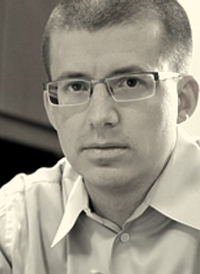
David Parry

David Parry, an assistant professor of emerging media and communications at the University of Texas at Dallas, argues that scholars have an obligation to publish their research in journals that make free copies available online. The Tech Therapy team talks with him about how the debate over open access to research has heated up in recent months, and invites journal publishers to give their views on next month’s podcast.

Links discussed in this episode: Memorials for Aaron Swartz Turn to Discussion of How to Honor His Legacy | Knowledge Cartels v. Knowledge Rights

Each month The Chronicle’s Tech Therapy podcast offers analysis of and advice on what the latest gadgets and buzzwords mean for professors, administrators, and students. Join your hosts, Jeff Young, The Chronicle’s technology editor, and Warren Arbogast, a technology consultant who works with colleges, for a lively discussion—as well as interviews with leading thinkers in technology.

Enhanced by Zemanta

BeerBrarian: Open Access: A World Without Database Vendors?

Tuesday, March 5, 2013

Open Access: A World Without Database Vendors?

As a thought experiment, let’s say we “win.” Professional and academic associations go open access, as much of physics has. The Directory of Open Access Journals is able to capture the far majority of these newly free works, and in turn these are snapped up by library catalogs thanks to link resolvers and discovery services. The same happens with the Directory of Open Access Books with regards to chapters in edited volumes.

But there’s a catch: DOAJ’s search function is not, to put it politely, robust. And there’s a larger problem behind search functionality thanks to incomplete metadata. Link resolvers and discovery services that pull from that search, culling that metadata, will lead to frustrated end users who cannot access and discover what they’re looking for.

In addition, the DOAJ is overrun with new items to catalog in this scenario, creating a backlog of epic proportions. Read more…

Enhanced by Zemanta

Join the Association of Jewish Libraries in Houston 2013! – YouTube

Come on down to the 48th Annual AJL Conference in Houston!

June 16-19

The preliminary schedule is now available at http://www.jewishlibraries.org/main/Events.aspx

Participate in roundtable discussions, learn about Library of Congress updates, OCLC updates, automation options, the Abraham Joshua Heschel archive, the Shel Silverstein Archive, Cairo Genizah, tweeting, skyping, chatting and more!

Early Bird Registration by April 16:  $485

Mail-in or online registration available at http://www.jewishlibraries.org/main/Events.aspx

Come on down to the 48th Annual AJL Conference in Houston!

June 16-19

The preliminary schedule is now available at http://www.jewishlibraries.org/main/Events.aspx

Participate in roundtable discussions, learn about Library of Congress updates, OCLC updates, automation options, the Abraham Joshua Heschel archive, the Shel Silverstein Archive, Cairo Genizah, tweeting, skyping, chatting and more!

Early Bird Registration by April 16:  $485

Mail-in or online registration available at http://www.jewishlibraries.org/main/Events.aspx

Enhanced by Zemanta

Libraries stack up in new digital world | roanoke.com

Research libraries such as those on the Virginia Tech campus are moving away from being repositories of knowledge to active curators of data.


Monday, March 4, 2013

BLACKSBURG — Virginia Tech researcher Emmanuel Frimpong and his team took two years to compile a database of biological traits of 809 U.S. freshwater fish species for a project funded in part by the U.S. Geological Survey.

But the team needed a new service at Tech’s Newman library to help them honor a commitment to the USGS to make that online database available to other scientists.

“I don’t think researchers across campus are aware of this service the library can provide,” Frimpong said.

Welcome to the modern research university library, where new skills and even new spaces are being developed to serve the needs of scholars, scientists and students working in the digital age.

From a digital-ready classroom to furniture reminiscent of the starship Enterprise, library officials say they are developing new ways to serve the campus, and the public.

As libraries transform for the digital age, “it’s an exciting time,” said Judy Ruttenberg of the Association of Research Libraries, a membership and advocacy organization for 125 of the nation’s largest research libraries, including the Library of Congress. Read more…

Enhanced by Zemanta

Professional Emancipation 2013 | CAREEREALISM

Professional Emancipation 2013 | CAREEREALISM.

Evolution of the Employee

Infographic authored by CAREEREALISM Media, a Career Media Company. To view the original post, see the original Evolution of Employee infographic.