How to Bounce Back: 5 Resilience Building Strategies for Your Career | LinkedIn

Career advice | Resilience | Emotional Intelligence

by Dr. Marla Gottschalk January 24, 2017

aaeaaqaaaaaaaapwaaaajdvjzte4otdhlwqxztktngvhny1imwuxltq1ywfhngfimzqyoq

I’ve often wondered why building resilience isn’t a key business imperative. My opinion is such, primarily because being human, is often at odds with work life. Work can routinely bring stress, negativity, setbacks and outright failures — and most of us are challenged to combat the effects.

We often frame conversations about resilience with stories of extreme hardship or extenuating circumstances. However, resilience could serve as an ever-present, daily mentor, helping us to rebound from the collected pressures of work life. Most of us forge on — taking little note of the increasing toll — and building resilience isn’t considered.

This can be a serious mistake.

Through all of the trials and tribulation, we rarely notice that our psychological resources are waning.We muddle on. We develop idiosyncratic mechanisms to bolster our mood and maintain motivation. However, the damage accumulates. We become less able to bounce back. Months later, we may realize that we still lament the project that has been cut, laid off co-workers or failing to land an important client. Read more…

 

You’ll never be famous: And that’s O.K. | Op-Ed

Career advice | Emotional intelligence |Education


04oncampus-master768

Charlotte Ager

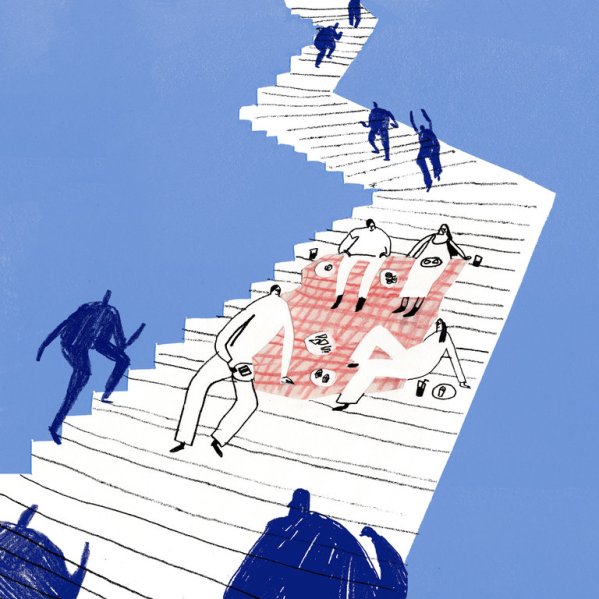
Today’s college students desperately want to change the world, but too many think that living a meaningful life requires doing something extraordinary and attention-grabbing like becoming an Instagram celebrity, starting a wildly successful company or ending a humanitarian crisis.

Having idealistic aspirations is, of course, part of being young. But thanks to social media, purpose and meaning have become conflated with glamour: Extraordinary lives look like the norm on the internet. Yet the idea that a meaningful life must be or appear remarkable is not only elitist but also misguided. Over the past five years, I’ve interviewed dozens of people across the country about what gives their lives meaning, and I’ve read through thousands of pages of psychology, philosophy and neuroscience research to understand what truly brings people satisfaction.

The most meaningful lives, I’ve learned, are often not the extraordinary ones. They’re the ordinary ones lived with dignity. Read more…

Librarians of the 21st: The Ultimate Superheroes of Research

Librarians | Archives | Career advice

Stefanie Maclin-Hurd | June 15, 2017

research

There’s a reason why, when you meet a librarian for the first time, she sometimes looks hesitant to tell you what she does for a living—we’re far too used to sharing our profession and hearing that libraries are dead because of Google. (They’re always shocked to hear that libraries are actually far more alive because of Google.) And even regular library patrons are sometimes shocked by the amount of research and reference that are part of a library’s daily work. In this essay, Stefanie Maclin-Hurd uses her wide range of library jobs to demonstrate that for all its changes, librarianship in the 21st century is still very much about research.

–Stephanie Anderson

I learned research before I learned to catalog, if one considers digging through websites as a high school student to be research. When considering the whys of being a librarian, research was something I knew I wanted to do. Not just because I loved to learn, but because I needed to know the reasons why behind each thing I learned. If I read a book, I needed to know what was true and what was enhanced, and research was the way to do it. In learning how to be a librarian, this need to know, this thirst for knowledge, was welcome. I studied archives in library school, and loved that I was able to search for the meanings and history behind the objects I was studying. Research is something which has followed me into every library and every archives job I’ve held. Research has made me a better librarian. Read article


Q&A: Finding a library-specific career coach or resume writer

Career advice | Job searching | Resume coach | Librarians

by Ellen Mehling | Library Career People July 18, 2017

Posted by Ellen Mehling

Q: I am wondering if there are library specific career coaches/resume writers out there. I have been receiving conflicting information when I have my resume reviewed, and the comments I am getting are more appropriate for business and sales, which are very different worlds than the library one. I want to show myself at my best, but I’m confused as to how to best do that, when it seems that some people look at what you have achieved, and being at my current job as a temporary employee for more than a year, but not getting more responsibility because I’m not even a part-time employee.

EM: (Full disclosure: I have been a career/resume advisor and instructor for librarians/info pros and library school students for over ten years.)

Yes, there are library-specific advisors who can give you feedback on your resume and make recommendations regarding your career development. As you noted, advice that is geared towards other fields may not be ideal for an information professional.

You can start with local, regional or even national professional organizations that have mentorship programs or offer resume-reviewing or other job-search assistance services. Such services may come with membership or there may be an additional fee for, for example, a resume or cover letter review, or a one-on-one advising session. Sometimes resume-review services are offered at conferences.

You can also ask trusted librarians in your network if there is anyone they’d recommend. As with any kind of advising or any paid service, you’ll want to get some info about the person providing the service, either from their website or LinkedIn page or via direct communication, to be sure this is the right one for you:

Read article:

How To Write A Stellar LinkedIn Summary

Leadership | Career advice | Social Media | Personal Branding

William Arruda July 09, 2017

960x0

Photo credit: Shutterstock

Several years ago, I posted an article on the three steps to writing the perfect LinkedIn summary. A lot has changed since then. LinkedIn has made many updates and revisions, and they recently launched an entirely new interface. In addition, the world of work has evolved even more into a place where the free-agent mindset is essential for prosperity. So it’s time for a major update to my last post on this topic.

Before we get into the mechanics of crafting a brilliant summary, let’s start with why your LinkedIn summary is so essential to your success:

• LinkedIn is often the first place people go when they are looking to evaluate you in a professional capacity.

• If people Google your name to learn about you, your LinkedIn profile is likely to show up in one of the top spots in the search results. Since 62% of Google clicks go to the top three search results, those who start at Google will end up at LinkedIn.

• For many of us, a LinkedIn profile is the most comprehensive bio we have on the web. Your LinkedIn summary (all 2,000 or fewer characters) will likely be read by more people than any other version of your bio . This added exposure gives you a great opportunity to capture the attention of decision makers — but only if you have a summary that connects.

An effective LinkedIn summary does three things: Read more…