Christina Paxson, President of Brown: Humanities Can Save Us | New Republic

What can we do to make the case for the humanities? Unlike the STEM disciplines (science, technology, engineering, and mathematics), they do not—on the surface—contribute to the national defense. It is difficult to measure, precisely, their effect on the GDP, or our employment rates, or the stock market.

And yet, we know in our bones that secular humanism is one of the greatest sources of strength we possess as a nation, and that we must protect the humanities if we are to retain that strength in the century ahead.

I do not exactly hail from the center of the humanities. I’m an economist, with a specialization in health and economic development. When you ask economists to weigh in on an issue, the chances are good that we will ultimately get around to a basic question: “Is it worth it?” Support for the humanities is more than worth it. It is essential. Read more…

Marian the Cybrarian – The Chronicle of Higher Education

Brian Taylor

For all the concern expressed about the imminent demise of the college library, there may never have been a time when librarians seemed more vital, forward-thinking—even edgy—than they do now.

It’s a dated reference, but today’s information professionals often remind me more of Ian Malcolm, the “chaos theorist” played by Jeff Goldblum in Jurassic Park (1993), than of the eyeglass-chain-wearing librarians of yore, if they ever existed in significant numbers. (I have seen only one, Mrs. Evelyn, from my elementary school in the early 70s.)

It’s not that many of today’s librarians routinely dress in sunglasses and black leather (though some do). It’s that, more than any other class of professionals in higher education, librarians possess a comprehensive understanding of the scholarly ecosystem. They know what’s going on across the disciplines, among professors and administrators as well as students. No less important, they are often the most informed people when it comes to technological change—its limits as well as its advantages. Read more…


You’ve Never Heard Of Her, But She’s Basically One Of The Most Important Women In Movie History

Alice Guy-Blaché was a woman of firsts. She did so many awesome things for movies and as you’ll see, just about no one has heard of her. That’s a travesty. The fact that this woman who made history was completely forgotten made me emotional for a full 8 minutes, much to the consternation of everyone around me.

The Myth and the Reality of the Evolving Patron | American Libraries Magazine

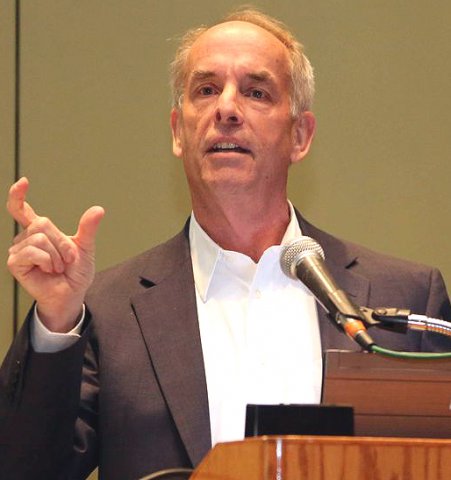
Lee Rainie, director of the Pew Internet and American Life Project

By Brita Zitin

The Scoop

Lee Rainie

Lee Rainie, director of the Pew Internet and American Life Project, knows how to win over a roomful of librarians, as he proved at the RUSA President’s Program, where he was the keynote speaker. He’s generous with both his flattery (“Every day spent with librarians is a good day”) and his cat photos (the feline census of his slideshow reached well into the double digits). But he also delivers—in abundance—what information professionals really want: reliable data that makes library work more meaningful.

The research pursued by Rainie and his colleagues at the Pew Internet and American Life Project covers library use on the national level and cannot substitute for insight into a particular community gathered through the kind of deep listening advocated by the Harwood Institute [http://www.ala.org/transforminglibraries/libraries-transforming-communities]. Still, Rainie has a talent for translating these broad strokes into practical tips. Drawing on Pew’s recent report “Parents, Children, Libraries, and Reading,” he said, “If you want to figure out who loves you most, it’s parents of minor children, and within that, the moms. Romance the moms.” Read more…

via The Myth and the Reality of the Evolving Patron | American Libraries Magazine.

New PEW: Younger Americans’ Library Habits and Expectations – Stephen’s Lighthouse

New PEW: Younger Americans’ Library Habits and Expectations – Stephen’s Lighthouse.

Younger Americans’ Library Habits and Expectations

by , and

Summary of Findings

http://libraries.pewinternet.org/2013/06/25/younger-americans-library-services/?utm_source=rss&utm_medium=rss&utm_campaign=younger-americans-library-services

Younger Americans—those ages 16-29—exhibit a fascinating mix of habits and preferences when it comes to reading, libraries, and technology. Almost all Americans under age 30 are online, and they are more likely than older patrons to use libraries’ computer and internet connections; however, they are also still closely bound to print, as three-quarters (75%) of younger Americans say they have read at least one book in print in the past year, compared with 64% of adults ages 30 and older.

Similarly, younger Americans’ library usage reflect a blend of traditional and technological services. Americans under age 30 are just as likely as older adults to visit the library, and once there they borrow print books and browse the shelves at similar rates. Large majorities of those under age 30 say it is  “very important” for libraries to have librarians as well as books for borrowing, and relatively few think that libraries should automate most library services, move most services online, or move print books out of public areas.

At the same time, younger library visitors are more likely than older patrons to access the library’s internet or computers or use the library’s research resources, such as databases. And younger patrons are also significantly more likely than those ages 30 and older to use the library as a study or “hang out” space: 60% of younger patrons say they go to the library to study, sit and read, or watch or listen to media, significantly more than the 45% of older patrons who do this. And a majority of Americans of all age groups say libraries should have more comfortable spaces for reading, working, and relaxing. Read more….