Technologies librarians need to know Current and emerging library technology trends in 2017

Career advice | LIS | Skills

kimdorityby Kim Dority

lis-technology-trends


Trying to get a handle on what library technologies LIS professionals need to know can be a challenge, as both the tasks that librarians are taking on – and the tools they’re using to do them – seem to be changing daily.

Nevertheless, it’s especially important for job hunters to be aware of technology skills and knowledge that are in-demand, because increasingly these tools will be central to successful performance of your career.

Two ways to frame key librarian work technologies

When understanding what may be relevant to your career, consider two variables:

  1. Where you work, i.e., whether the employer would be a traditional LIS or non-LIS setting.
  2. The responsibilities and type of work you might be doing for that employer.

LIS employer type or collection

Read more…

What Kind of Career Growth Are You Seeking?

Career advice | Professional development | Mentoring

Marla Gottschalk's avatarThe Tilbury Edit

BiasUnlitBulb

In today’s world, career paths have been described as “boundary less”. We build careers and seek fulfillment by collecting varied experiences — across organizations, managers and work content. However, what we are seeking growth-wise at specific points in time will often guide that direction.

Ultimately, we seek situations that offer alignment with our current career vision.

Through years of speaking with individuals about work and career, I have observed combinations of elements (such as change vs. stability) that describe different types of growth “states”. We might flux in and out of these states — depending on our life situation or goals — and none would be considered “right” or “wrong”. Interestingly, some contributors seem comfortable remaining in one state for an extended period of time. while others might shift to meet their evolution.

Here are just a few I’ve observed. Please share any others in comments.

  • Future forward.

View original post 511 more words

How to Bounce Back: 5 Resilience Building Strategies for Your Career | LinkedIn

Career advice | Resilience | Emotional Intelligence

by Dr. Marla Gottschalk January 24, 2017

aaeaaqaaaaaaaapwaaaajdvjzte4otdhlwqxztktngvhny1imwuxltq1ywfhngfimzqyoq

I’ve often wondered why building resilience isn’t a key business imperative. My opinion is such, primarily because being human, is often at odds with work life. Work can routinely bring stress, negativity, setbacks and outright failures — and most of us are challenged to combat the effects.

We often frame conversations about resilience with stories of extreme hardship or extenuating circumstances. However, resilience could serve as an ever-present, daily mentor, helping us to rebound from the collected pressures of work life. Most of us forge on — taking little note of the increasing toll — and building resilience isn’t considered.

This can be a serious mistake.

Through all of the trials and tribulation, we rarely notice that our psychological resources are waning.We muddle on. We develop idiosyncratic mechanisms to bolster our mood and maintain motivation. However, the damage accumulates. We become less able to bounce back. Months later, we may realize that we still lament the project that has been cut, laid off co-workers or failing to land an important client. Read more…


Sharing learning from an inspiring professional career

Mentoring | Coaching | Leadership | Management | Academic Libraries

by Kerry Parry 31 August 2017

sharing_learning_banner

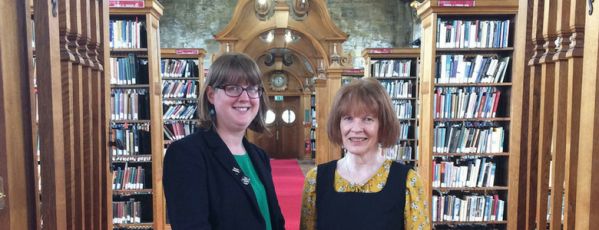
Kathryn Parry interviews Sue Hodges, former Director of Libraries and Archives, Bangor University. Sue talks about her career path, and her belief that with confidence and support you can go further than you might think, and achieve the career that you really want.

AS I start my new job as CILIP Wales Development Manager, I am making many new connections. I am struck by how many of these connections are with people who are at the opposite end of the career ladder to me. I see many experienced professionals retiring, but I cannot see much ­evidence of succession planning. How do we learn and carry forward the services these professionals have created? I want to hear how other professionals started out, what shaped their career and any advice they can give.

To gain more understanding of these issues, I recently interviewed Sue ­Hodges, who has just retired from her role as ­Director of Libraries and Archives at Bangor University. We talked about how her career developed, and how she aims to share what she has learnt over the years by mentoring and supporting people in their career plans.

Kathryn: How did you get into librarianship? 

Read more…

You’ll never be famous: And that’s O.K. | Op-Ed

Career advice | Emotional intelligence |Education


04oncampus-master768

Charlotte Ager

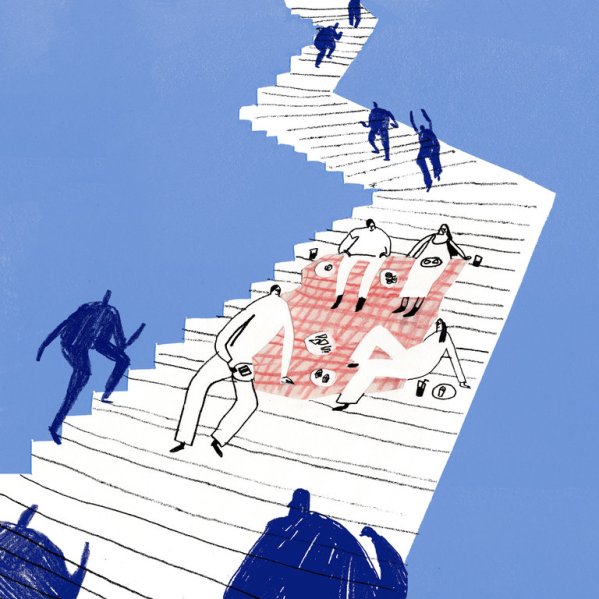
Today’s college students desperately want to change the world, but too many think that living a meaningful life requires doing something extraordinary and attention-grabbing like becoming an Instagram celebrity, starting a wildly successful company or ending a humanitarian crisis.

Having idealistic aspirations is, of course, part of being young. But thanks to social media, purpose and meaning have become conflated with glamour: Extraordinary lives look like the norm on the internet. Yet the idea that a meaningful life must be or appear remarkable is not only elitist but also misguided. Over the past five years, I’ve interviewed dozens of people across the country about what gives their lives meaning, and I’ve read through thousands of pages of psychology, philosophy and neuroscience research to understand what truly brings people satisfaction.

The most meaningful lives, I’ve learned, are often not the extraordinary ones. They’re the ordinary ones lived with dignity. Read more…