BiblioTech: Why Libraries Matter More Than Ever in the Age of Google by John Palfrey [review]

Libraries | Advocacy | Digitization | Data preservation | Book review

Reviewed by Stephanie L. Gross, MSLIS

BiblioTech: Why Libraries Matter More Than Ever in the Age of GoogleBiblioTech: Why Libraries Matter More Than Ever in the Age of Google by John Palfrey

My rating: 4 of 5 stars

Reviewer bio:
I am an academic librarian whose main responsibility has been to establish and maintain a large database for electronic reserves. I have a solid background in public service, and have mentored library school students and recent graduates for over 10 years. I am conversant in issues relating to access and technology relating to digitization of materials as well as those born-digitally. Since I follow library news on a daily basis, I read this book more as a review of the known, while noting sources for future use. Most of those concerned digitization of material and aspects relating to institutional repositories. A second focus was based on a new work responsibility, that of personal librarian to undergraduate honors students.

Review:
This volume was written by a “feral” librarian with a law degree. It included the major areas where and how libraries are ever-relevant today: users, spaces, platforms, hacking, networks, preservation, education and copyright. Noteworthy highlights for me were the discussions of how some librarians and advocates are reinventing libraries while acknowledging their tradition roles in democratic society. Public, academic, school and special libraries were included. The ‘hybrid-ness’ of libraries is emphasized, along with the innovative factor of digitization of a variety of materials. Risks are involved when print is not saved to backup data. “Data rot” happens when technology fails, but also when newer forms outpace older, obsolete ones. Budgets are stretched to accommodate both digital and analog materials. The author calls for the ‘collaboration’ among librarians, the establishment of library networks, consortia, and private as well as public funding. The conundrum of copyright, data rights and collection policies was briefly examined.

Additional Subject headings might include:

Digital libraries
Web archiving
Digital preservation
Archival materials – Digitization
Library materials — Digitization
View all my reviews

A New Study Says Anxiety Can Help You Perform Better — But Only If You Know How To Respond To It

Emotional Intelligence | Mental Health | Career Advice

Amy Morin, contributor Forbes August 12, 2017

960x0

Shutterstock

Anxiety is probably the most common reason people enter my therapy office. From specific phobias to generalized anxiety disorders, people are often desperate to do whatever it takes to get rid of their discomfort.

While you may not have a diagnosable anxiety disorder, there’s no doubt you experience anxiety sometimes. Whether the thought of giving a speech makes your heart race or your fear of asking for a raise leaves your palms sweaty, anxious feelings are normal.

In an effort to spare yourself from anxiety, you might decline to take a risk or decide to stay inside your comfort zone. After all, anxiety is uncomfortable and an easy way to prevent it is to avoid anything anxiety-provoking.

But new research shows anxiety isn’t always harmful. In fact, it could improve your performance if you know how to respond to it. Read more…


Eulogy for the Information Age: The Future is Impact Not Access

Advocacy | Access | Impact | New Librarianship


What Library Will Create the First Real Website? (Please Stand Up)

Libraries | Websites | Catalogs

Matt Smith | August 2, 2017

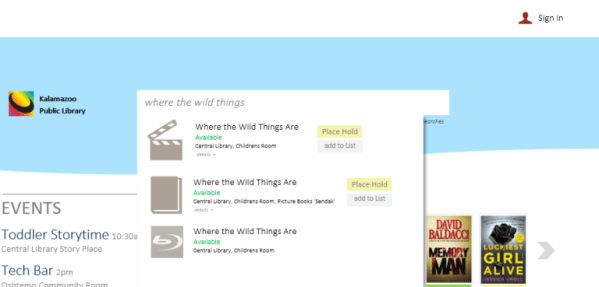
It’s 2017 and the website of every single library in the country suffers from the same old, cruel, schizophrenic, UX nightmare dichotomy: the website and the catalog, the website versus the catalog. Two products, two experiences, two silos, two staff members behind them. Both are wannabees. The website is almost a catalog, and the catalog is almost a website. And together they are redundant, cluttered, confusing, and pointless to patrons.

The first library to figure out a true single user experience – that is to say, a real website – gets Library of the Year.

Scratch that.
Library of the Decade.

I truly believe that. We have come a long way, but we need to jump this hurdle. Our online presence – specifically the home page – is now more important than ever, more important than our physical space. With eBooks and eAudiobooks integrating into Search (sort of), with various providers like Overdrive, Hoopla, 3M, and Zinio – all of which are confusing to patrons; with online articles (if you can find them), online registration, online room booking, and online programs (and don’t get me started on online library cards which still don’t exist)….

Yeah, the website matters.

search_1

Source: What Library Will Create the First Real Website? (Please Stand Up)

Librarians of the 21st: The Ultimate Superheroes of Research

Librarians | Archives | Career advice

Stefanie Maclin-Hurd | June 15, 2017

research

There’s a reason why, when you meet a librarian for the first time, she sometimes looks hesitant to tell you what she does for a living—we’re far too used to sharing our profession and hearing that libraries are dead because of Google. (They’re always shocked to hear that libraries are actually far more alive because of Google.) And even regular library patrons are sometimes shocked by the amount of research and reference that are part of a library’s daily work. In this essay, Stefanie Maclin-Hurd uses her wide range of library jobs to demonstrate that for all its changes, librarianship in the 21st century is still very much about research.

–Stephanie Anderson

I learned research before I learned to catalog, if one considers digging through websites as a high school student to be research. When considering the whys of being a librarian, research was something I knew I wanted to do. Not just because I loved to learn, but because I needed to know the reasons why behind each thing I learned. If I read a book, I needed to know what was true and what was enhanced, and research was the way to do it. In learning how to be a librarian, this need to know, this thirst for knowledge, was welcome. I studied archives in library school, and loved that I was able to search for the meanings and history behind the objects I was studying. Research is something which has followed me into every library and every archives job I’ve held. Research has made me a better librarian. Read article