Personal archives | Digital preservation | Electronic records managment
Reviewer: Stephanie L. Gross, MSLIS
 Personal archiving : preserving our digital heritage by Donald T. Hawkins
My rating: 4 of 5 stars
Reviewer bio:
I am an academic librarian whose primary responsibility is to oversee the electronic reserves component of Springshare LibGuides. Recently I was appointed to serve on the task group to explore, report and advice the establishment of an institutional repository at my university. Having already read much literature concerning IR, I have begun widening my reading to include material that examines IR and its various components from a variety of viewpoints, academic, technical and personal.
Review:
This book is an anthology created by specialists in libraries, archives and technology. It is a rich, yet succinct, volume compiled as a primer for lay individuals who are involved in archiving personal material. Much of the focus is on preserving, organizing and sharing memorabilia. However, true to expectation, an equal emphasis is given to the preservation of digital files from various formats. Some attention is devoted to records management, although that is from a more introductory, philosophical perspective. What I believe to be the strength of this work is its practical advice to both lay and professionals alike. It is specific and technical enough to satisfy academic librarians who are not trained as archivists. Often we are tasked with aiding and guiding library users (students and faculty) in the preservation of their personal data. Those who are interested in understanding specific aspects of establishing and maintaining an institutional repository, including the compilation and promotion of best practices will certainly need to research further. However, this handbook does indeed list and annotate various resources (e.g. Library of Congress, Internet Archives) which is extremely helpful. There are two chapters dedicated to the preservation of email from faculty, scholars and researchers. Much is made of the chronic conundrum of “store and ignore”, benign negligence, concerning the backing up of files and precious data. The mandate to keep up with current technology, upgrading equipment and the appropriate hardware and software is underscored. (A pitch for able institutions to take on this responsibility is made, especially regarding work by scholars and communities.) Budgeting is given sufficient space to gain an appreciation of the magnitude of the demands on resources, both monetary and human. The final chapters look into the future, including intelligent discussions and projections relating to issues of ownership, copyright and social media. Although various software firms and websites are mentioned by name and have already disappeared by the time of this writing, their absence does not diminish the usefulness of their mention. The principles and philosophy of the services remain valid into the present.
Recommended audience:
Public libraries, academic libraries, special libraries, archives, museums
Recommended added subject heading:
Institutional repositories.
Digital libraries.
View all my reviews

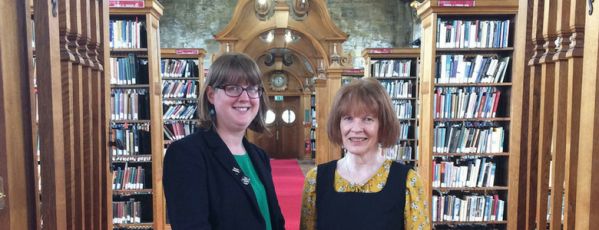







 Stephanie L. Gross, MSLIS